



- Quantum Computing 101: Qubits for Kids
- Election Season: Identifying Misinformation and Fake News
- Difference: Misinformation, Disinformation, and Malinformation
- Psychological Operations (PsyOps): Influencing Minds for Strategic Impact
- Difference: Objective Facts vs. Subjective Facts or Claims
- Global Consumer Prices Inflation Rate Data: 1960 to 2022
- Mohith Agadi receives ET Inspiring Leaders’ Award
- ChatGPT and the Risks of Misinformation: Understanding the Implications
- The Generative AI Disinformation Age: Decentralized Fact-checking Systems Could Help
- World Press Freedom Index 2023 Reveals Threat to Journalism from Fake Content Industry
- Importance of Fact-checking in Research
- International Fact-Checking Day: A Celebration of Truth
- Fact Protocol Named One of the Top 25 Web3 Innovations by YourStory
- Critical Reasoning and its correlation with Fact-checking
- Blockchain Technology in News Publishing and Reporting: Advantages & Benefits
- What is Propaganda and How to Debunk it?
- Decentralized Reporting as a Service (DRaaS)
- Fact Protocol is a Public Good, Here is Why
- What is Clickbait?
- Fact-checking the images in a Generative AI era
- Generative AI: Advantages, Disadvantages, Limitations, and Challenges
- Fact-checking in Reputation Management
- Importance of Fact-checking in Academic Research
- Sustainability in Fact-checking
- Advantages: Web3 in Fact-checking
- Web3: A Decentralized Web
- How to Fact-check: 5 effective ways
- Blockchain technology as a tool to detect and combat Fake News
- What is Decentralized Fact-checking?
- What is Media Literacy and why is it important?
- Difference: Fact-checking and Investigative Journalism
- What is Fact-checking?
- What is Disinformation?
- What is Fake News and Misinformation?
- The state of fake news and misinformation 2022
- Should social media platforms penalize users who spread misinformation?
- News consumers in the US found that 38.2 percent had unknowingly shared fake news
- Trust in various US-based news media organizations in 2022
- Quiz Edition NFT FPID-042022-1
- Gusture Is Joining Fact Protocol Ecosystem To Launch Decentralized Fact-Checker
We are leveraging AI and blockchain technologies to empower Fact-checkers in combating fake news
Why Blockchain?
Blockchain technology can play a vital role in the fight against fake news and disinformation. Blockchain provides a secure, decentralized, and tamper-proof ledger that can be used to store and verify data. This makes it difficult for anyone to manipulate or alter data without being detected, ensuring the integrity and accuracy of the information. By leveraging blockchain, Fact Protocol can ensure that the information it provides through its Structured Fact Repository is trustworthy and verifiable.
What We Do?
Fact Protocol is an independent research and innovation ecosystem dedicated to advancing trustworthy information. Through research, open standards, applications, tools, platforms, and programs, we develop practical solutions to address misinformation, AI-generated manipulative content, data provenance, information integrity, and critical thinking.
As a not-for-profit organization, we also empower researchers, developers, and entrepreneurs to build the next generation of fact-checking platforms, Agentic AI systems, provenance technologies, and decentralized applications that strengthen trust in information worldwide.
Fact Protocol = Strategies + Apps + Tools + Platforms + Programs.
Fact in News / Media
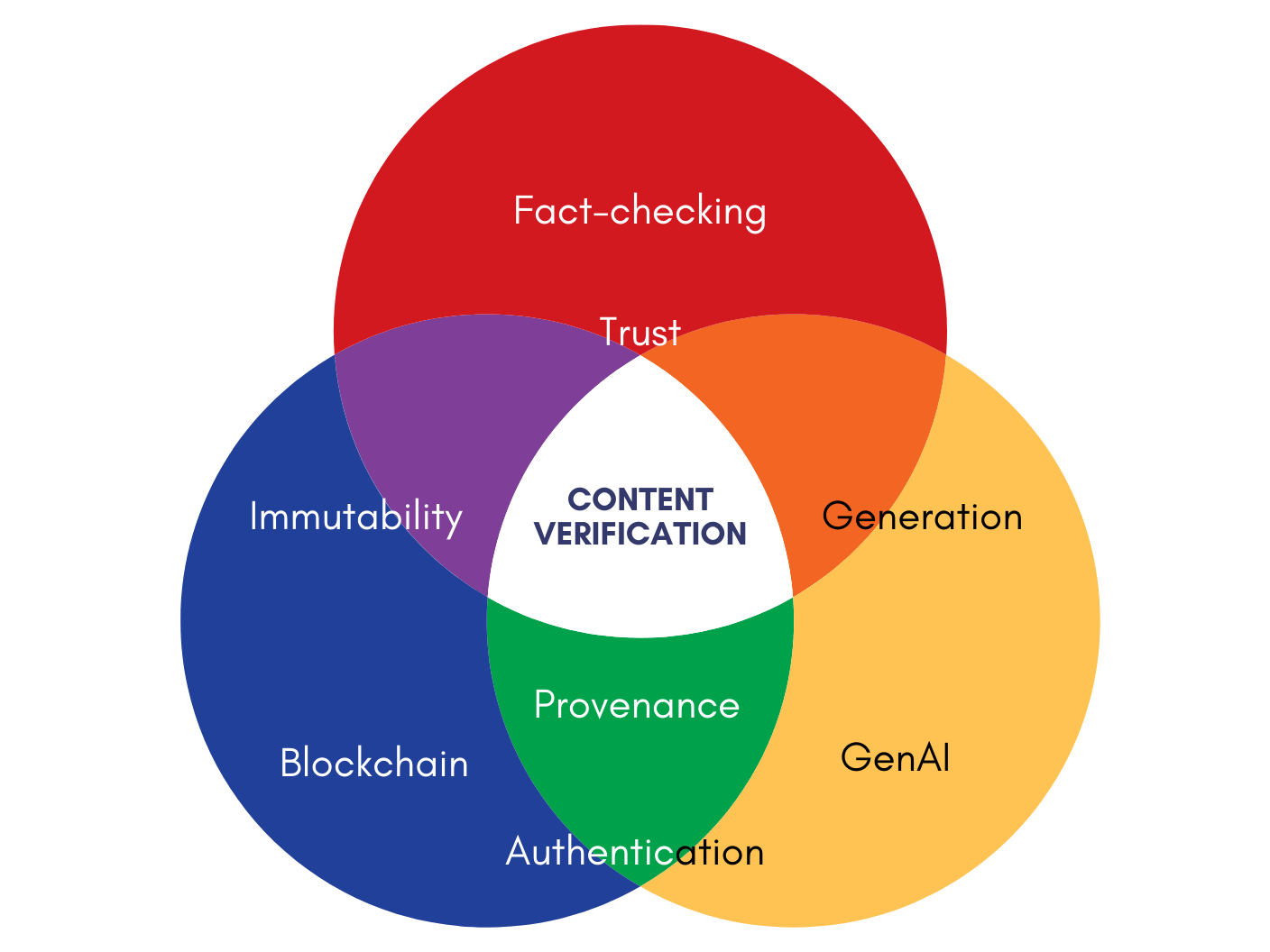
Fact Protocol shares the Content Authenticity Initiative’s (CAI) mission to combat mis/disinformation by empowering consumers with the tools they need to determine the veracity of what they are seeing online.
Santiago Lyon, Head of Advocacy & Education, CAI by Adobe

The founders argue the advantages of a decentralized network also extend to preventing the concentration of power, keeping the validation process democratic, eliminating bias, and ensuring full transparency.
Mohith Agadi, Co-founder of Fact Protocol told The Decrypting Story

Ecosystem: Partnerships / Integrations
The Fact Protocol ecosystem is growing with native dApps, cross-chain integrations, and industry partnerships. The goal is to create open-access platforms for fact-checkers & journalists and achieve decentralization, privacy layer, and censorship resistance.








The idea and concept
March 2021 – the idea of the project is born and proof of concept (PoC) is created.
R&D is commissioned
In September 2024, the previous protocol design started undergoing significant changes, including the addition of an AI strategy for scalability.
Research Program
2026 – Fact Protocol Research is an independent research initiative advancing trustworthy information through interdisciplinary research, open publications, and practical frameworks. We explore misinformation, AI-generated content, data provenance, information integrity, and critical thinking to help build a more trustworthy information ecosystem.
Platforms & Tools
Live (Continuous) – We will recruit innovators through our accelerator and support them in developing and launching their own fact-checking platforms, tools, AI agents, and decentralized applications (dApps) to assist fact-checkers, information volunteers, and general users globally.
Our Team
A team of AI & Web3 enthusiasts and fact-checking professionals working daily to make the world a better place. We are building a decentralized protocol that is resistant to censorship to combat fake news, misinformation, and disinformation.





Decentralized Fact-checker
World’s first decentralized fact-checking platforms with incentivization mechanics. Powered by blockchain/web3 technology and globally distributed communities.
Interested in Fact-checking?
We have compiled a collection of educational resources for journalists, students, and fact-checkers.
Web3 Verifiability Layer – Phase 1
The Fact Protocol is a decentralized and scalable fact-checking system that powers a suite of tools, also known as dApps in Web3 terms, that combats Fake News/Misinformation/Disinformation using native fact-checking applications, open APIs, and community contributions. As stated in the Proof-of-Concept, the protocol employs a two-factor approach (2FA) to ensure that fact-checks are verified unbiasedly.
With a community-driven and incentive approach, the Fact Protocol aims to scale across all categories and geographies. Together, we can prevent misinformation from spreading and save societies from becoming victims. The protocol’s rules are formed and/or amended on an as-required basis by governance vote.
The Fact Protocol — a governance and incentive protocol – is further explained in the White Paper (accessible via the main navigation).