


The Contribution Purchasing Power (CPP) Model
Mohith Agadi
Fact Protocol Working Paper No. 2026-01 | Version 2.3 | August 2026
DOI (Access on SSRN):
https://doi.org/10.2139/ssrn.7138823
All Versions (Access on Zenodo):
https://doi.org/10.5281/zenodo.21685283
Overview
As participation in memberships, creator communities, donor programs, and loyalty schemes grows, the same contribution often delivers less recognition, exclusivity, and meaningful interaction over time. This paper introduces the Contribution Purchasing Power (CPP) model to explain why. It shows how network benefits and positional dilution interact as communities scale, producing a non-monotonic pattern where value first rises and then declines. Using a recent policy change at the Tirumala Tirupati Devasthanams as a real-world case, the paper demonstrates how contributors perceive and respond to declining contribution purchasing power. The framework offers a clean, contributor-centric lens for understanding modern participation economies.
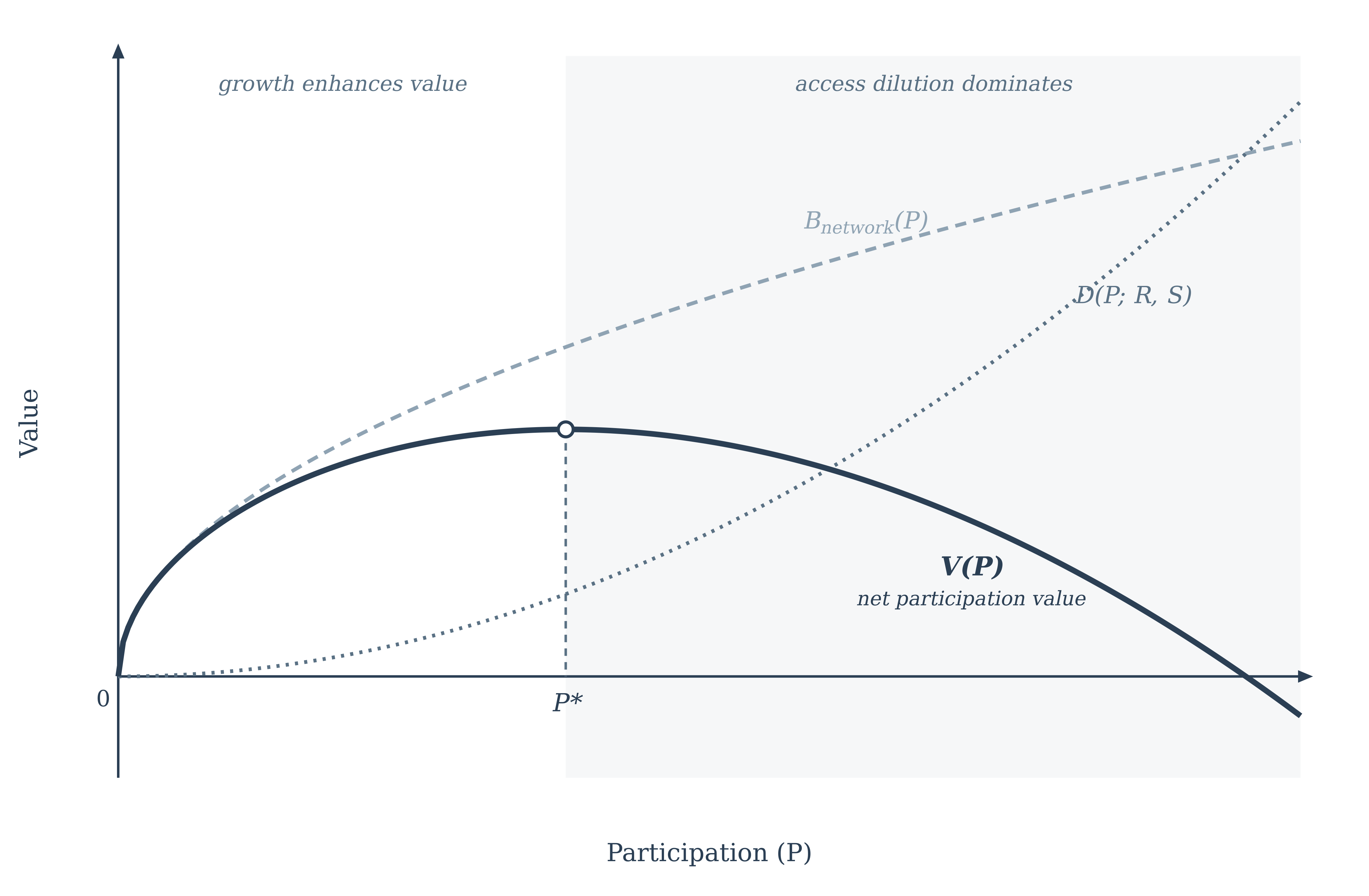
How Access Dilution Emerges
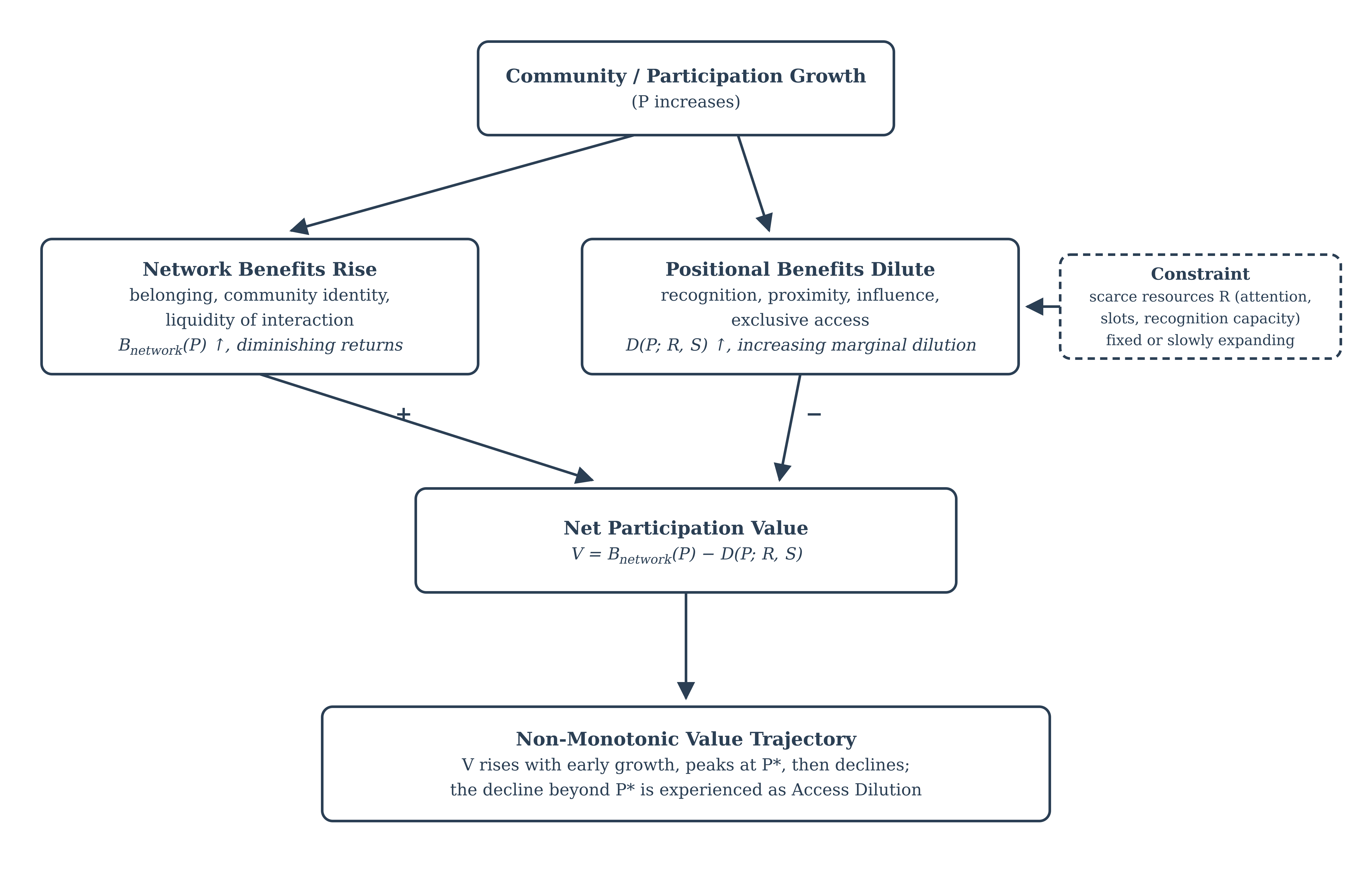
Why This Paper Matters (Key Highlights)
- Introduces the Contribution Purchasing Power (CPP) model, a formal framework for analyzing how value changes as participation grows.
- Provides the first quantified, non-Western case study (Tirumala Tirupati Devasthanams) showing revealed-preference behavior around contribution value.
- Clearly distinguishes structural Access Dilution from deliberate platform degradation (enshittification).
- Offers five testable propositions for future empirical work.
- Includes two original figures that visually explain the CPP model and the mechanism of Access Dilution.
How to Cite
Suggested Citation
Agadi, Mohith, Access Dilution in Contribution Economies: Scarcity, Scale, and the Erosion of Contribution Purchasing Power (July 18, 2026). Available at SSRN: https://doi.org/10.2139/ssrn.7138823